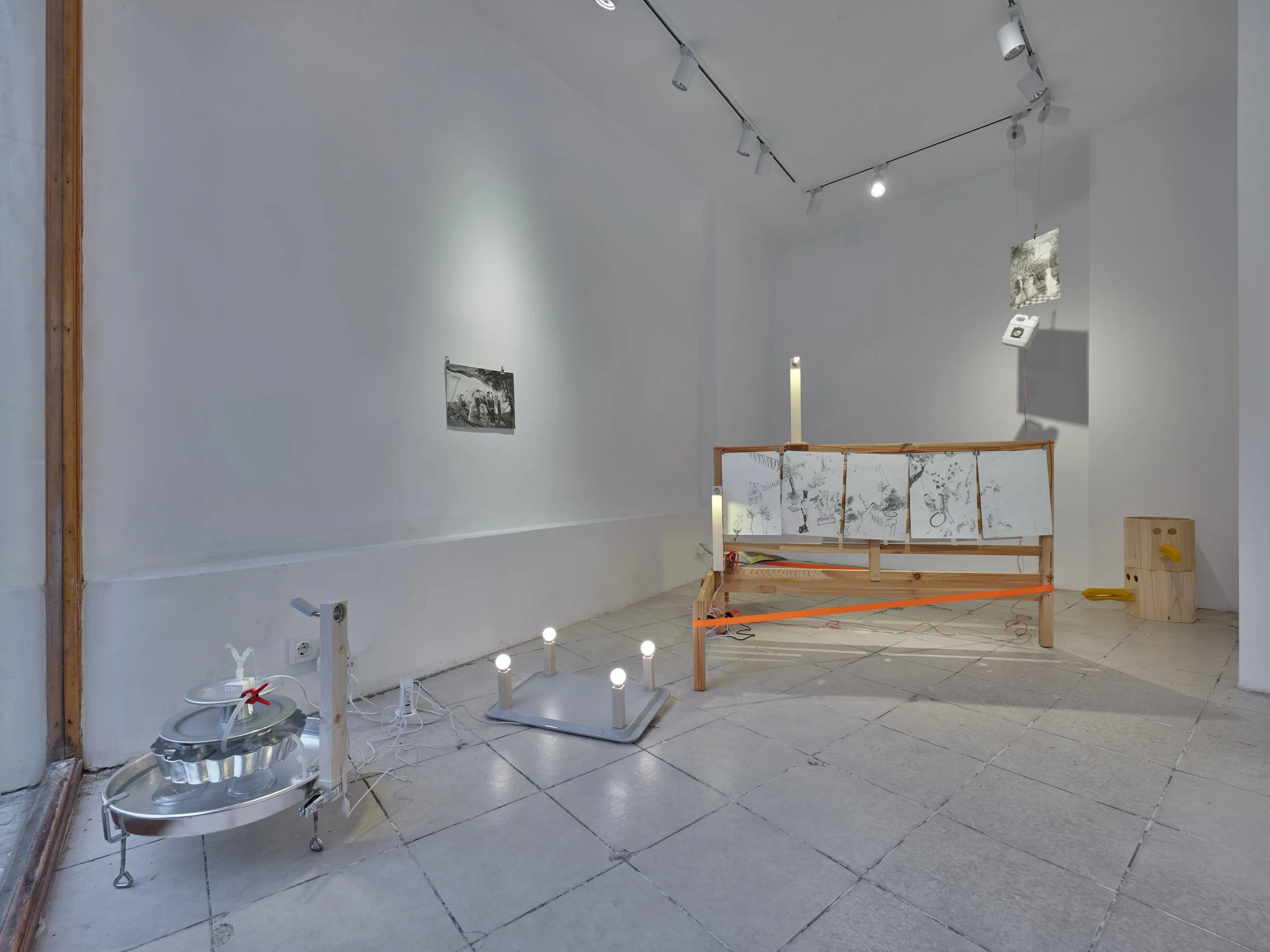
moving park
an exhibition by ziyun and wang Chao
MOVING PARK - FROM GUANGZHOU TO ISTANBUL
22.01 - 28.02.2026
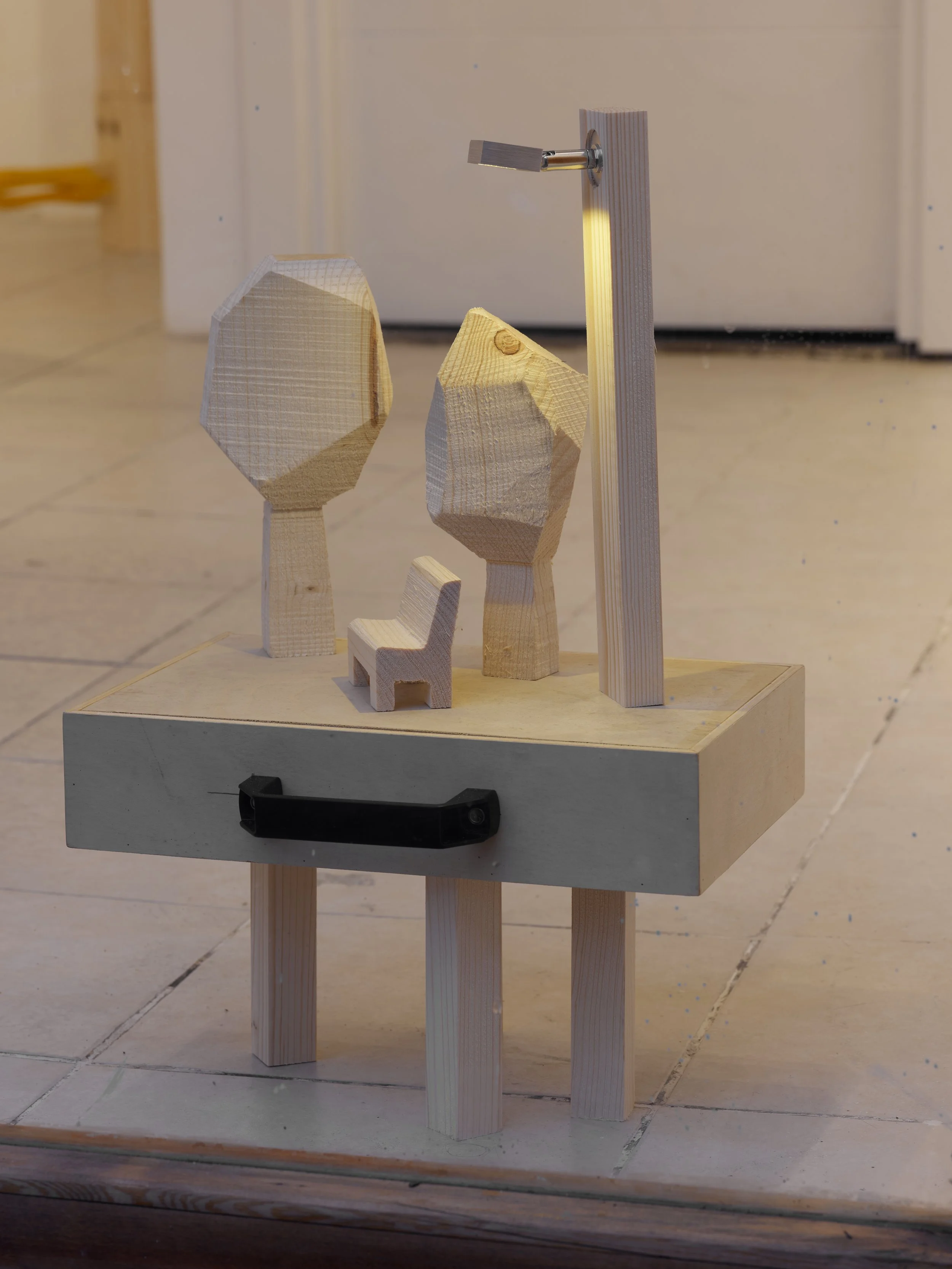
Moving Park emerges from Ziyun and Wang Chao’s desire to discover Istanbul through an artistic residency. Arriving from Guangzhou with distinct practices – Ziyun works through drawing and painting, Chao through construction and installation – they create together spaces that evolve, breathe, and transform. What happens when artistic gestures shaped in the streets of Guangzhou find new momentum in Istanbul? How does one encounter, for the first time, a city located nearly 8,000 kilometres from home, using artistic practice as a way to enter into dialogue and articulate what is perceived?
Engaging with these questions inevitably draws attention to the time of creation, an in-between moment, when one is no longer at the point of departure, yet not fully arrived. In this sense, the residency period is precisely the time one allows oneself to look elsewhere, to confront something unfamiliar. Anyone who claims to know in advance the outcome of such a process is making a bold assumption.
This is the core idea of the exhibition: Moving Park will not be finished on the day of the opening. It will not crystallize into a final state after a carefully programmed installation designed to leave no trace behind. Nor will it be one of those static exhibitions that present a flawless result, the reflection of a work fully known and planned in advance.
As a process, the artists’ workspace and the exhibition space merge into one. The artists’ workspace and the exhibition space merge into one. Starting from a few works developed in Guangzhou and presented at Secant Space, the artists gradually weave the fabric of an exhibition that can be experienced once, twice, five times, never revealing exactly the same face.
Moving Park creates a bridge between two cities that may share more than one might initially expect: a vast urban scale, neighborhoods in constant transformation, and public spaces negotiated on a daily basis.
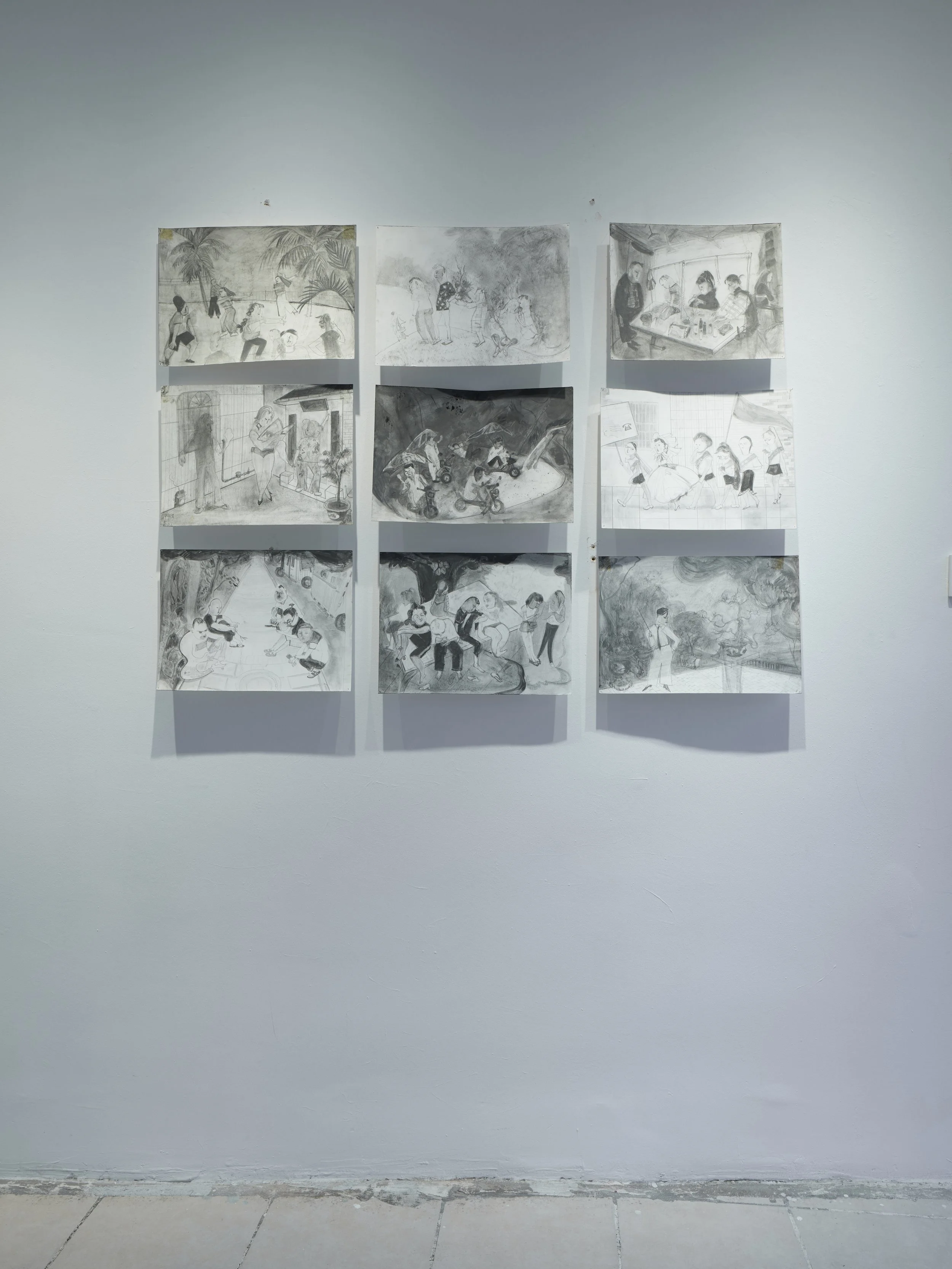
© Barış Özcetin
Ziyun & Wang Chao
Ziyun (*1986) and Wang Chao (*1986) are an artist duo from Guangzhou, China. Their practices often respond to specific sites in a playful way. Through humor, they engage with lived experiences and inner landscapes in contemporary China, gently disrupting the tensions of everyday life.
Drawing on a wide range of materials, forms, textures, and sensations—from daily life, literary spaces, and art history—they weave these references together to create environments open to multiple interpretations. Their work unfolds across various media, including drawing, installation, illustration, and artist’s books.
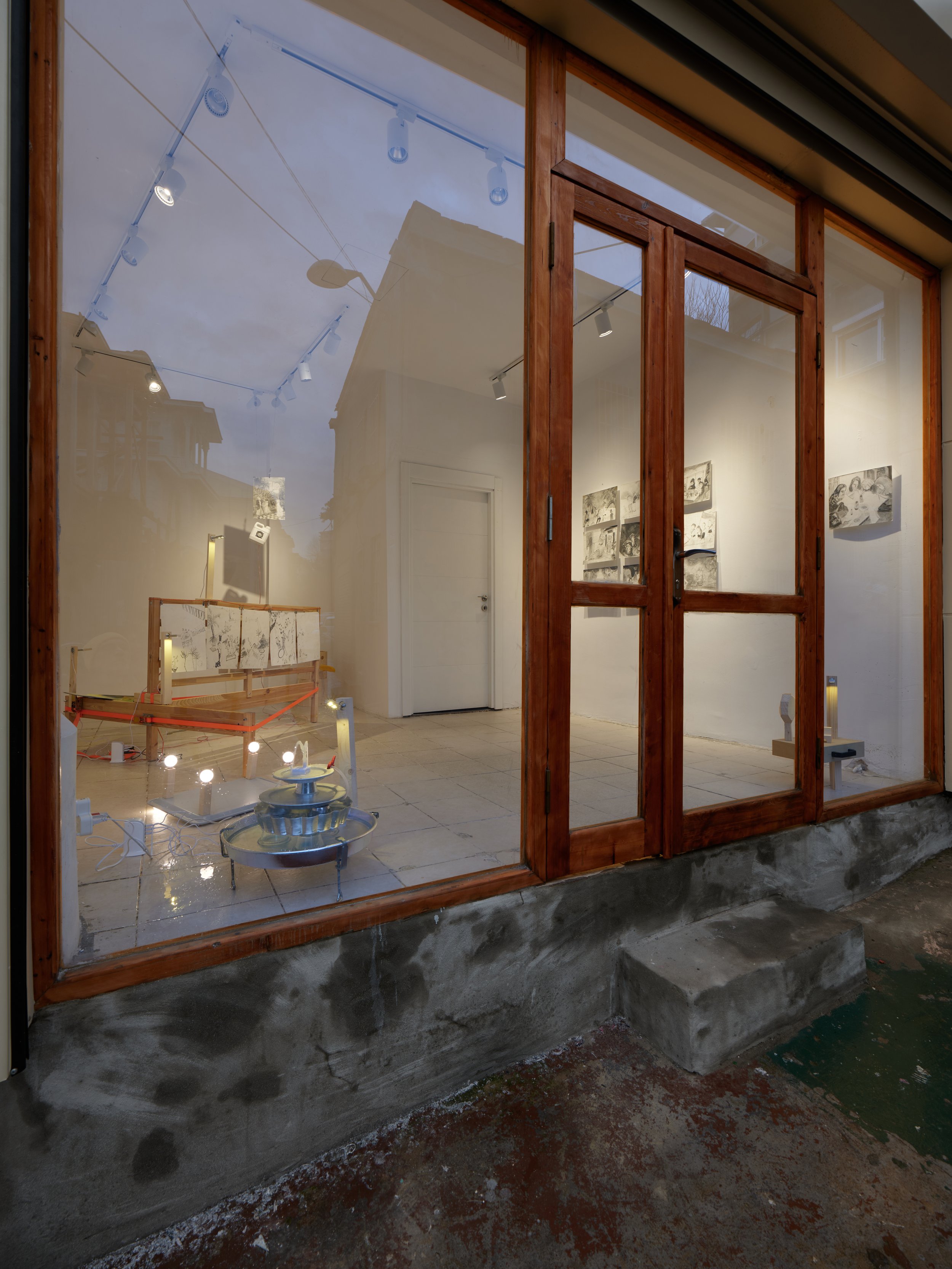
© Barış Özcetin
@Marina Vysotskaia
Moving Park - Guangzhou’dan İstanbul’a
22.01 - 28.02.2026
Moving Park, Ziyun ve Wang Chao’nun İstanbul’u bir sanatçı misafir programı aracılığıyla keşfetme arzusundan doğar. Guangzhou’dan, farklı ama birbirini tamamlayan pratiklerle yola çıkan sanatçılar, Ziyun’un desen ve resim, Wang Chao’nun ise inşa ve yerleştirme üzerinden ilerleyen yaklaşımlarıyla, birlikte evrilen, nefes alan ve dönüşen mekânlar üretir.
Guangzhou sokaklarında biçimlenen sanatsal jestler İstanbul’da yeni bir ivme kazandığında ne olur? İnsan, evinden yaklaşık 8.000 kilometre uzaklıkta bulunan bir şehirle ilk kez karşılaştığında ve sanatsal pratiği gördüğünü anlamlandırmak ve bir diyalog kurmak için araçsallaştırdığında ne ile karşılaşır?
Misafirlik süreci, bakışın başka yöne çevrilebildiği, bilinmeyenle yüzleşmeye alan açan bir zamansallık olarak belirir. Moving Park, açılış günü tamamlanmış olmayacaktır. Önceden tümüyle kurgulanmış, kusursuz bir sonucun sunulduğu statik sergi modellerine yaslanmaz.
Sanatçıların çalışma alanı ile sergileme mekânı iç içe geçer. Sergi bir süreç olarak gelişir. Guangzhou’da üretilmiş ve Secant Space’te sunulan eserlerden yola çıkan yapı, zaman içinde örülen bir doku gibi genişler.
Sergi iki aşamalı olarak gerçekleşir. İlk açılışta Çin’den gelen eserler sergilenir. İkinci açılışta İstanbul üretimleri tamamlanır ve sergi dönüşmüş olarak açılır. Sanatçılar ilk açılıştan itibaren mekânı atölye olarak da kullanır.
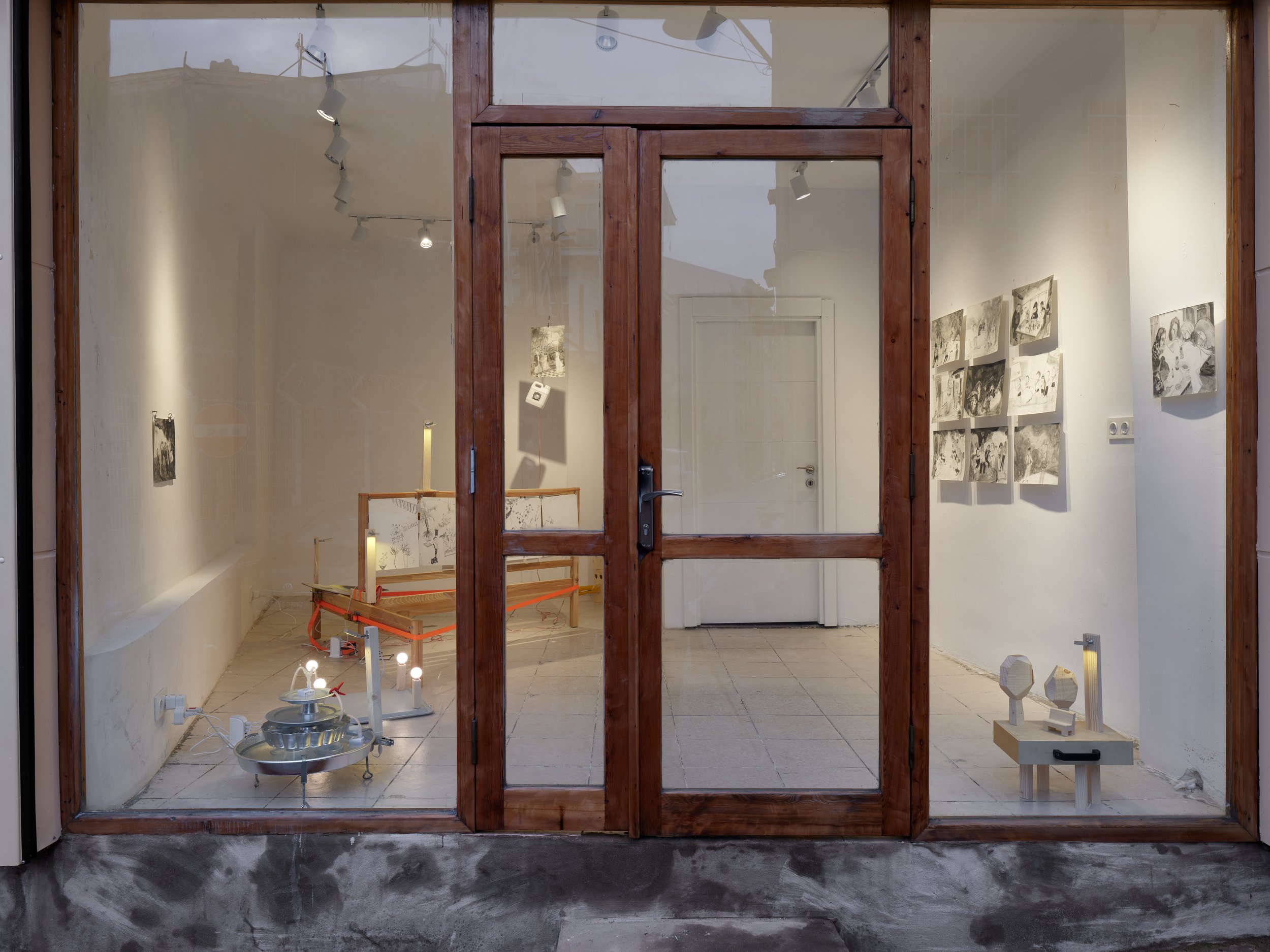
© Barış Özcetin